


Phone: 267-437-3098
Fax: 267-385-7300
Email: PASS1@AccessiblePass.net
Website: https://accessiblepass.net
Welcome to the Paschall Power Newsletter, your top source for news and information for the blind community. We are enthusiastic about keeping you up to date on the latest access technology, AI, cool new tech, and important news, all written with blind and low vision readers in mind. Thank you for lending us a moment of your time and blessings in your accessible & digital journey!
Quick accessible fact💡
The first official screen reader for Windows was SlimWare Window Bridge, released by Syntha-Voice Computers in 1992 for Windows 3.1!

Accessibility Note
If you are reading this newsletter with a screen reader, consider using your “say all” feature to enjoy the full experience hands free, including accessible images and other described items. You can also move by headings to jump quickly between articles.
Inspiration Corner – Amanda Gordan
Please grab a second and take in the following inspirational quote by Desmond Tutu, human rights activist:
“Do your little bit of good where you are; it’s those little bits of good put together that overwhelm the world.”
Now, let us get into some accessible news📰
AI Telehealth leader Medvi and the trust problem


Medvi has become one of the most talked-about AI telehealth companies in the news because its growth has been enormous while questions about its marketing have grown just as quickly. Business Insider reported that the company made $401 million in business last year, generated $65 million in profit, and is projected to reach $1.8 billion in sales this year, even as its advertising has included seemingly fake doctors and multiple lawsuits. That is a reminder that fast growth in health tech can look impressive on paper while still leaving a very uneasy feeling in real life. The legal and ethical concerns are not small. Business Insider reported that Medvi has been sued at least three times in the past 11 months by people alleging that the company and affiliate marketers violated spam laws, while other reporting says affiliate campaigns used fake doctor personas, AI-generated headshots, fake biographies, and misleading testimonials. In plain English, the system appears to have holes big enough for bad actors to drive an entire ad campaign through.
That matters because health care is one area where “good enough” is not good enough at all. Reporting has also linked Medvi and its marketing ecosystem to fake or altered testimonials, lifted doctor images, questionable product claims, and FDA-warning territory around misleading promotion, which is exactly why consumers should verify clinicians, pharmacies, and company credentials before sharing medical or payment information. A slick ad is not a medical license, and a smiling AI headshot is definitely not a second opinion. Blind and disabled consumers deserve special caution here because deceptive or poorly built pages can make it harder to tell who is real, what service is legitimate, and where sensitive information is actually going. Medvi’s story shows how profitable AI telehealth can become when marketing outruns oversight, and that is why the Paschall Power Newsletter team is urging readers this May to stick with trusted health sources, slow down before clicking, and treat any request for personal health data with serious care. Activate the below link for more about Medvi and additional warnings💡
Self-Driving Vehicles in Portland must include disability accommodations


Portland’s self-driving debate has drawn real optimism from disability advocates, but that optimism comes with conditions. OPB reports that Portland’s draft rules would require self-driving cars to get a permit, meet safety standards, carry insurance, and include disability accommodations before operating, and Waymo says it will not launch there until it has a permit. That is the kind of sentence accessibility advocates like to hear, because “we’ll fix it later” has never been a strong transportation plan. Disability Rights Oregon has publicly argued that autonomous vehicles could increase transportation options for people with disabilities only if the city requires accessibility from the beginning, and the group identifies Emilie Wylde Turner as one of its board leaders. Some public reactions in Portland have also been positive when paired with strong rules, including comments that autonomous vehicles could help people with mobility challenges if policymakers get the accessibility framework right.
For wheelchair users, the upside is easy to picture: more independence, fewer scheduling headaches, and less reliance on another person to help with every trip. The problem is that today’s autonomous reality still trails that promise, because Wheelchair Travel reports that Waymo’s autonomous fleet vehicles are not wheelchair accessible, options exist in some markets, it uses separate human-driven vehicles rather than the autonomous fleet itself. From Waymo to Tesla, the technology may be racing ahead, but access is still trying to catch the bus. For blind consumers, the story is more mixed than hopeless. Waymo says it has worked with blind advocacy groups, tested app accessibility, and added features such as horn or melody cues to help riders identify the correct vehicle, and one blinded veteran said the app worked with his screen reader and guided him toward the car. Still, safe travel is about more than booking a ride, so the question for May is whether these vehicles can consistently pick up and drop off blind riders in truly safe, usable locations rather than simply arriving somewhere in the general spirit of convenience. Activate the below link for more about Portland’s accessibility rules for self-driving vehicles💡
Readers respond: Driverless cars should be accessible – oregonlive.com
Special Paschall Power Update📰
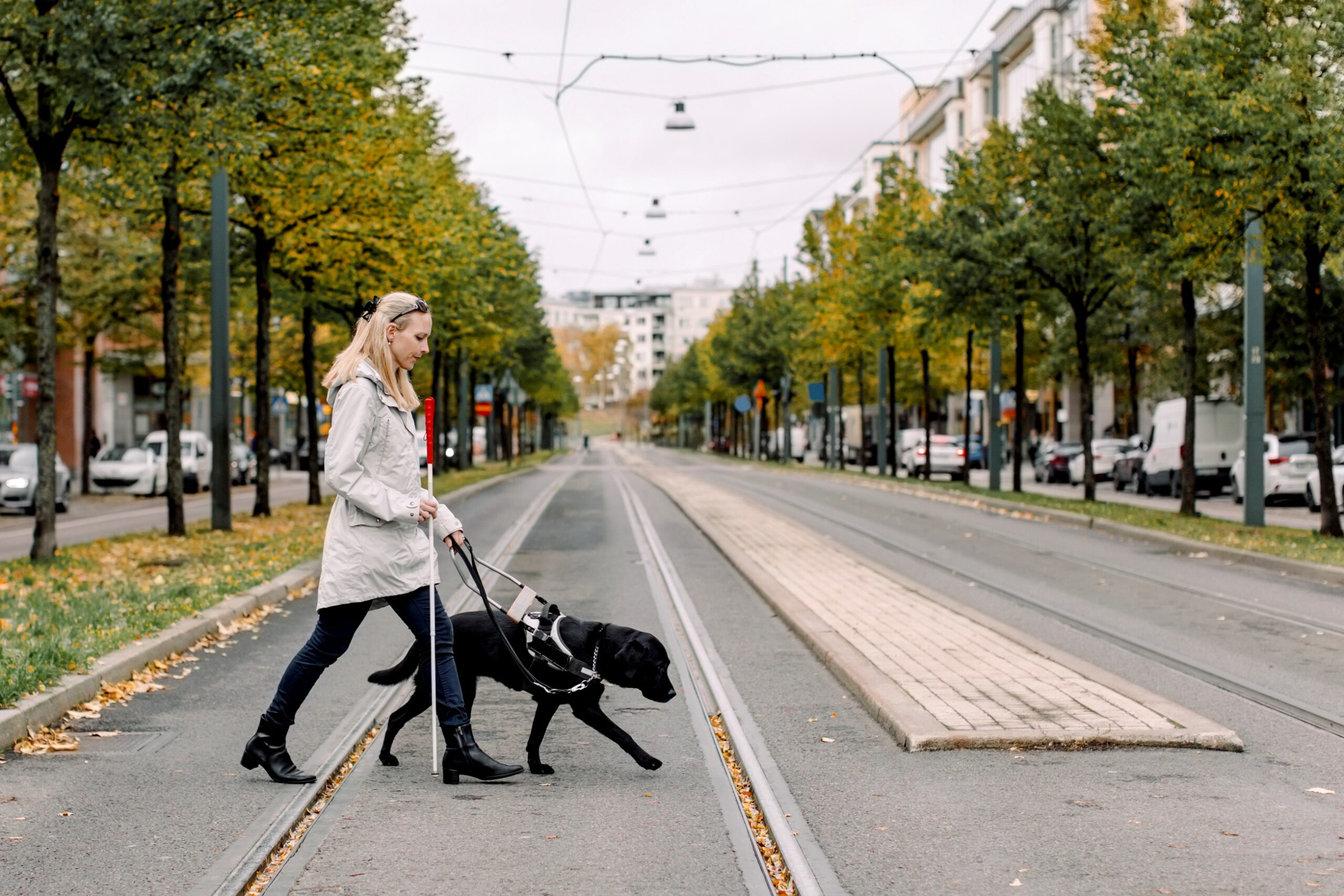
Last month we featured an article about the upcoming (living your best accessible life,” event in Philadelphia, Pennsylvania. The event will bring together many of the five county blind organizations for one day of fellowship, resources, presentations, Philly’s own (Blind Cuisine with James Robinson) live giveaways and much more! If you’re in the area, don’t miss this chance to enjoy an entire day dedicated to you, the blind community. Read on for the full agenda and how you can safely register for the event.

Living Your Best Accessible Life
Join us for an inspiring community event focused on empowerment, advocacy, and innovation for the blind and low-vision community.
- Date: Saturday, May 16, 2026.
- Time: 10:00 AM to 4:00 PM.
- Location: New River Presbyterian Church, 4159 W. Girard Avenue, Philadelphia, PA 19104.
- Accessible Entrance: Enter at 1213 N. 42nd Street.
- Admission: $25.
- 10:00 AM: Welcome and Opening Session. Shirley Brotman, President of the Philadelphia Regional Chapter, opens with an inspiring future vision, followed by Event Host John Luttenburger kicking off the day with announcements, icebreakers, and an accessible roll call.
- 10:15 AM: Leadership and Scouting Without Sight. Don Dunn, VP of PRC and Overbrook Alumni President, shares his incredible achievements as a blind Boy Scouts of America leader.
- 10:30 AM: Accessible Reading and Library Services. Aimee Thrasher-Hanson from the Library of Accessible Media for Pennsylvanians spotlights vital resources available through the state library system.
- 10:45 AM: Pennsylvania Association of Blind Merchants. Pam Baquero shares her dynamic vision for accessible entrepreneurship and updates on the state of the organization.
- 11:00 AM: Medicare and Marketplace Options. Jamal Blanks from Independence Blue Cross breaks down valuable health marketplace benefits to maximize coverage for blind and disabled consumers.
- 11:15 AM: Community Support Organizations. Mary Brucker highlights the uplifting vision and supportive services offered by the Pennsylvania and Montgomery Associations for the Blind.
- 11:30 AM: Blind Lions Club. Shirley Brotman and Bette Passanante-Rodriguez present a forward-looking update on the Blind Lions Club.
- 11:45 AM: Morning Wrap-Up and Lunch Instructions. Get ready for merchant introductions, thrilling door prize raffles, and details for the lunch break.
- 12:00 PM: Lunch and Merchant Browsing. Enjoy a delicious Taco Bar, browse the amazing merchant room, and share wonderful fellowship with other attendees.
- 1:00 PM: Blind Entertainment Showcase. Get ready to laugh with blind comedian Zane Birnie, and experience thrilling live demonstrations of audio descriptions in movies, TV, and audio games.
- 1:30 PM: Philadelphia NFB Presentation. Stacie Leap, President of the Philadelphia NFB, shares her powerful personal journey and the vital advocacy services offered by the NFB.
- 1:40 PM: Nevilaires Chorus. Vivian Williams highlights the joyful community fellowship and support initiatives of the club.
- 1:50 PM: Break and Door Prizes. Take a quick stretch, hear afternoon event updates, and win more fantastic prize drawings.
- 2:00 PM: Keynote Address. Rosemary Martin, Second VP of the Pennsylvania Council for the Blind, takes the stage for an uplifting discussion on the Council’s community impact and bright outlook.
- 2:15 PM: Blind Golf Presentation. Valdez Thomas introduces the dynamic sport of blind golf and the fantastic opportunities it brings to the accessible sports community.
- 2:30 PM: Brothers With A Vision. Jason Miller and Barry Fields introduce this exciting new blind men’s group focused on powerful community advocacy, career advancement, and empowering fellowship.
- 2:45 PM: Sponsor Spotlight. Don’t miss an exclusive demonstration of the Sensaball cane attachment, featuring a live product giveaway.
- 3:00 PM: Accessible Dance and Movement. Shirladelphia brings the energy with her accessible dance program, including info on her free library classes to get everyone moving.
- 3:15 PM: Technology and Access Solutions. Tony Ballou and Jason Miller explore the cutting-edge of access tech, including Meta Glasses, mobile solutions, and navigating the AI invasion.
- 3:30 PM: Community Advocacy. Yvonne Hughes speaks about essential issues like career advancement, vital legislation, housing resources, and accessible voting to empower our community.
- 3:45 PM: Closing Remarks. A heartfelt final thank-you from our emcee, crucial wrap-up information, and the grand finale door prize drawings.
Register for the event by using the following secure options:
John Anderson, Event Treasurer:
- Cash App – $jja224
- PayPal ($1.00 processing fee) send $25.00 to – www.paypal.com; Email: heavymetalkidd16@aol.com
- Checks (make payable to PRC) and mailed to:
John Anderson
1829 E. Mad Street
Philadelphia, PA 19134
Phone – (215) 410-8524
American Airlines fires blind reservationist and denies (reasonable accommodations)


The EEOC says American Airlines violated federal law by refusing a reasonable accommodation for a reservations representative after she developed cortical blindness and then firing her. According to the agency, the employee asked for screen-reader software that would turn on-screen text into speech so she could keep doing her job. Public reports on the case say she specifically sought JAWS, a screen reader widely used by blind professionals in office settings.
Reports on the lawsuit say American kept her on unpaid involuntary leave for nearly four years and then terminated her, which is a painful reminder that delays can do real damage to a person’s career. Those same reports say she also tried to move into other positions and was denied that chance. For blind workers, that kind of wall can feel familiar: not “you can’t work,” but “we won’t make work accessible.” This story hits hard because blind and low-vision Americans already face steep odds in the labor market. The American Foundation for the Blind says 10% of people ages 16 to 64 with vision difficulty were unemployed in 2025, compared with 4% of people without vision difficulty, and the Bureau of Labor Statistics says the overall unemployment rate for people with disabilities was 8.3% in 2025. Even among disabled adults age 25 and older with a bachelor’s degree or higher, the jobless rate was 5.3% in 2025.
Blind workers are doing customer service and reservations work, education jobs such as teacher of the visually impaired, and many other office and community-facing roles, but sheltered workshop jobs still remain part of the picture. Recent reporting says more than 30,000 disabled people still work in sheltered workshops, with average pay around $4 an hour, while some workers can legally be paid far less under subminimum-wage rules, even as low as 25 cents an hour. That is why this case matters far beyond one airline: when employers block access to everyday tools like screen readers, talent gets benched before it ever gets a fair shot. Activate the below link for more about EEOC’s discrimination case against American Airlines💡
Google Vids’ and the amazing new realistic AI Voices, a game changer!

Google says AI voiceovers in Google Vids now run on Gemini 3.1 Flash Text-to-Speech and include 30 new conversational voices built to sound more natural and expressive. Google also says those voices work in 24 languages inside Google Vids, which sits in the Google Workspace environment. In plain language, your script can sound less like a robot reading a parking ticket and more like an actual person talking to actual people. What makes the update stand out is the control. Google says creators can type directions such as “Read this like you’re excited,” add pacing with bracket cues like “[pause],” and even drop in prompts like “[laugh]” to shape the delivery. Google Cloud describes Gemini TTS in similar terms at a deeper level, saying users can steer style, accent, pace, tone, and emotional expression through natural-language prompts.
For newsletters, outreach, and event promotion, which opens a lot of doors. A church can turn a Bible class announcement into a warm audio invite, a community group can make an accessible audio flyer, and a small business can build a polished promo without booking voice talent for every short message. Because the feature sits inside Workspace, scripts, edits, and voiceovers can stay in one shared workflow instead of bouncing between separate apps. Some people will instantly wonder whether this kind of expressive speech is a preview of where digital assistants are heading next, but Google has only announced these voices for Google Vids and Gemini TTS so far, and we are wondering whether the voices will be available for Siri or Apple’s Visual Intelligence features. What is certain right now is that synthetic speech is getting more human in rhythm, emotion, and timing, and that is great news for marketing, announcements, training clips, and other audio-first communication. For blind and low-vision communities, a faster path from text to clear spoken audio is not just flashy; it can be genuinely useful. Activate the below link for more about the new Google Vids Ai powered voices💡
Google Vids just made its AI voiceovers incredibly lifelike with a new Gemini update
Wait! There may be life in that older iPad


An older iPad can stay useful for a long time if you treat it kindly and stop asking it to live next to coffee, pizza grease, and mystery crumbs. A soft routine matters keep it clean, keep it dry, and skip harsh household cleaners on the screen and ports. Older tech ages better when we practice the classic rule: reduce, reuse, and then recycle. The safety issue users should take most seriously is the battery. Apple says iPad batteries should be serviced by Apple or an authorized service provider, and Apple says the device and battery should be disposed of separately from household waste at end of life. The EPA adds that lithium-ion batteries in tablets can become a fire hazard if they are broken, bent, or crushed, and that these batteries should not go into the trash or regular curbside recycling.
Reuse is where older iPads can still shine. One smart habit is to stick with the apps and uses that still match your model and Apple ID instead of forcing an older iPad to act brand new all over again. When a tablet is too old for heavy multitasking, it can still do lighter work well, such as reading, streaming, email, video calls, note-taking, or audio playback, and for many blind users that can still cover school, home, and entertainment. Apple’s guidance fits that long-game approach: service the battery when needed and recycle the device properly only when it truly reaches end of life. Recycle is the final step, not the first one. Apple says you can bring an end-of-life iPad to Apple or use Apple Trade In, and the EPA says whole devices with non-removable batteries can also go to certified electronics recyclers or local household hazardous-waste programs. A simple rule helps: if the iPad still charges normally, stays cool, and does the jobs you need, keep using it carefully; if the device shows physical battery damage or starts acting like a tiny drama factory, retire it safely before it turns into a bigger problem. Activate the below link for more about extending the life of older iPads💡
How to keep an older iPad safe, reliable & useful over time
Paschall Power Star of the Month: Ms. Vilissa Thompson!
We have reached the end of our 30th edition, you know what that means, right? Yes indeed, it is time to honor the Paschall Power Star for May 2026, and this incredible advocate has “broken the glass window,” for disabled woman, men and other (disabled minorities). Vilissa Thompson has created numerous advocacy networks focused on fighting legislation that affects accessibility progress and has a record of tremendous success! The Paschall Power Newsletter’ is once again honored to put focus on such another amazing person who has contributed (real change) in their community.
Vilissa Thompson, endless fighter for advocacy rights!


Vilissa Thompson’s journey into civil rights leadership began in Winnsboro, South Carolina, where she grew up navigating the world as a Black girl with a disability. Born with osteogenesisimperfecta, a rare genetic condition commonly known as brittle bone disease, Vilissa gained firsthand insight into how physical environments, institutions, and systems often exclude disabled people—especially in marginalized communities. These early experiences shaped her resolve and fueled her desire to support others facing similar barriers. From the very beginning, Vilissa understood that disability was not a personal limitation, but a social issue demanding visibility, equity, and change.
Driven by a passion for service and justice, Vilissa pursued higher education and earned a master’s degree in social work, becoming a Licensed Master Social Worker (LMSW). While she envisioned operating a traditional therapy practice, she soon realized that professional spaces—even those meant to support others—were often inaccessible to disabled practitioners. Instead of allowing those barriers to restrict her path, Vilissa redirected her expertise toward advocacy. In 2013, she founded Ramp Your Voice! a platform dedicated to empowerment, education, and self‑advocacy for disabled people, with a particular focus on Black women and disabled people of color, whose voices were frequently missing from mainstream disability conversations.
Through Ramp Your Voice! Vilissa emerged as a national thought leader in disability rights and civil advocacy. She created the influential #DisabilityTooWhite hashtag to challenge the lack of racial diversity in disability representation and launched the widely cited Black Disabled WomanSyllabus, a resource that reshaped academic and community conversations. Her work has reached policymakers, universities, nonprofits, and national media, and she has served as a policyconsultant, including contributing to disability rights planning for a U.S. presidential campaign. Vilissa’s thought leadership has been featured in The New York Times, ESSENCE, Forbes, TheAtlantic, and many other leading outlets, reflecting the breadth and significance of her work.
Today, Vilissa Thompson continues to educate, organize, and lead with clarity and courage, reminding communities that disability rights are civil rights. Her work emphasizes empowerment over pity and policy change over performative inclusion. By centering lived experience, especially within communities historically pushed to the margins, Vilissa has built a legacy rooted in integrity, truth‑telling, and transformative impact. Her voice has helped rewrite how disability is understood in social justice spaces and beyond. The Paschall Power Newsletter thanks its readers for reading our May 2026 edition, newsletter number thirty. Activate the below link for more about the amazing Vilissa Thompson💡
Stay Connected, Share, and Support
On behalf of the Paschall Power Newsletter team, thank you for reading. Do you have questions, suggestions for future content, or interest in submitting an article for a future release? Drop us a line at the contact link below:
Contact us – accessiblepass.net
https://accessiblepass.net/contact-us/
Consider Donating
Paschall Power sincerely thanks and appreciates all donations that help keep this work moving forward. “Growth occurs through individual effort, community support, and the generosity of those with integrity and power.” Please activate the link below for our donation page:
Consider Donating – accessiblepass.net
https://accessiblepass.net/donation/