





Phone: 267-437-3098
Fax: 267-385-7300
Website: https://accessiblepass.net
Welcome to the Paschall Power Newsletter, your top source for news and information for the blind community. We are enthusiastic about keeping you up to date on the latest access technology, AI, cool new tech, and important news, all written with blind and low vision readers in mind. Thank you for lending us a moment of your time and blessings in your accessible & digital journey!
Quick accessible fact💡
The first official screen reader for Windows was SlimWare Window Bridge, released by Syntha-Voice Computers in 1992 for Windows 3.1!


Accessibility Note
If you are reading this newsletter with a screen reader, consider using your “say all” feature to enjoy the full experience hands free, including accessible images and other described items. You can also move by headings to jump quickly between articles.
Inspiration Corner – Amanda Gordan
Please grab a second and take in the following inspirational quote by Amanda Gordan:
“The new dawn blooms as we free it; for there is always light, if only we’re brave enough to see it, If only we’re brave enough to be it.”
Now, let us get into some accessible news📰
Meta Smart Glasses and Facial Recognition
Welcome back to Paschall Power Newsletter! As you know, our team has been constantly researching and providing you with the latest scoop on smart glasses for a few years now. We predicted this exact moment many months ago: facial recognition is making its way to Meta smart glasses. In fact, we were the first to report on the Harvard students who created the “I-XRAY” software, running an experiment on a train to demonstrate how the Meta glasses could instantly identify strangers. Now, Meta is exploring officially giving their glasses the ability to perform real-time facial recognition, pulling up valuable information about whoever you happen to be looking at.
For our blind and low-vision readers, this technology could be nothing short of a superpower. Imagine walking into a bustling room and having your glasses discreetly whisper the names of friends, colleagues, or that one neighbor whose name you always forget! It offers a profound level of social independence and situational awareness for the public. However, the “bad things” are undeniably spooky. The ability to instantly pull up a stranger’s home address, phone number, and personal details just by glancing at them creates massive privacy issues. This sparks a real debate: the government and law enforcement use facial recognition every day to view and analyze people in public, so shouldn’t the public be able to do the same thing? Legally speaking, the courts have long held that there is “no expectation of privacy in public,” meaning capturing someone’s face on the sidewalk is not illegal, its concerning, but there are cameras watching and tapping us everywhere we go and all the time. So, is facial recognition already approved by the law? While citizen and commercial use of facial recognition is not heavily restricted at the federal level and exploits this legal loophole, some states are scrambling to pass biometric privacy laws to rein it in. Until then, the law technically allows us all to be walking detectives—for better or worse!
Written by the Paschall Power Newsletter team💡
Paschall Access Solutions Newsletters –
Apples AI glasses: Real time (autonomous) AI vision

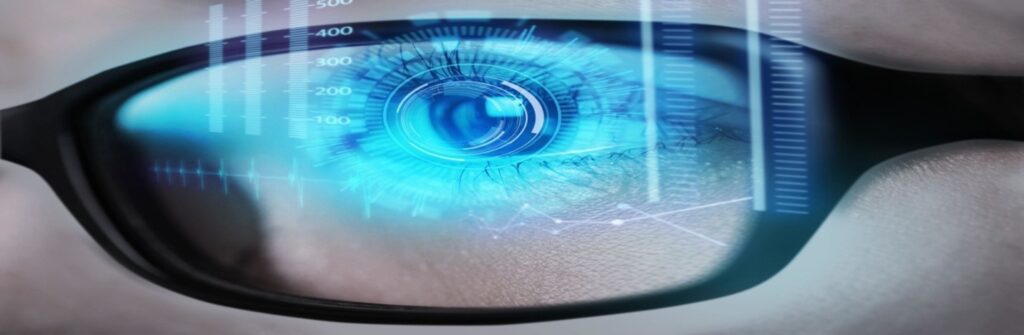
The highly anticipated Apple Smart Glasses! Slated to hit the shelves in early 2027 and is packed with unheard of autonomous AI vision detection technology. Apple is skipping the bulky headset approach and designing their own sleek, fashion-forward frames. Unlike current AI glasses on the market that often rely on a single camera to snap photos for cloud processing, Apple’s upcoming frames are rumored to feature a resolute dual-camera system. One camera will manage standard everyday capture, while the other is strictly dedicated to advanced, real-time computer vision.
So, what does this mean for our blind and sight-impaired smart glasses users? The accessibility options are shaping up to be truly revolutionary. While today’s glasses can describe a photo if you ask them to, Apple’s deep integration with “Siri 2.0” and the iPhone ecosystem means these glasses will offer continuous, real-time environmental descriptions. Imagine having Apple’s world-class VoiceOver technology built right into your eyewear, providing instant text translation, flawless object recognition, and spatial audio cues to help you navigate physical spaces seamlessly.
The biggest difference between Apple’s upcoming glasses and the AI frames you can buy today is this shift from “requesting” information to “experiencing” it in real-time. Current market options are fantastic, but they often require you to manually prompt AI and wait a few seconds to hear what is in front of you. Apple’s dedicated computer vision hardware aims to eliminate that lag, offering blind users can always-on, intuitive companion.
Activate the link below for more:
Move over Meta: Apple smart glasses are coming | Macworld
Heads Up, Smart Glasses Nearby: The New Detector App and Why It Matters


A new Android app nicknamed “Nearby Glasses” is getting attention because it can alert you when it thinks smart glasses are close by—right when facial recognition and always-on cameras are becoming everyday reality. This matters even more because of the possibility of Meta’ adding facial recognition (“Name Tag”) capabilities to smart glasses, which raises big questions about consent, surveillance, and who gets identified in public without asking, as we previously reported. And for blind folks, there is an extra layer: we cannot rely on spotting a tiny recording light or subtle “camera cues,” so an audio alert can restore some of the awareness sighted people get automatically.
The basic idea is simple: many smart glasses use Bluetooth Low Energy (BLE), and the app scans for nearby BLE “advertising” signals that can look distinctive for certain devices. When the app detects a signal that matches patterns associated with smart-glasses makers, it sends an alert to your phone. That also means it is not magic (sadly): it can miss devices if Bluetooth is off, and it cannot guarantee someone is recording—what it provides is a heads-up that the kind of wearable tech that can record may be nearby.
Here are three real-world ways this kind of app can help blind people and everyone else: first, it supports informed consent—if you get an alert in a private or sensitive setting, you can choose to move, speak up, or ask what is being recorded. Second, it adds situational awareness for blind users in public spaces, where knowing “smart glasses are nearby” can reduce anxiety and help you decide whether to share personal details in that moment. Third, it gives communities a practical counterbalance to facial recognition creep: if more people can detect these devices, it becomes harder for wearable surveillance to stay invisible and unchallenged. If you do get an alert, you do not have to go full spy-movie—start with a simple question like, “Hey, are those smart glasses recording right now?” because most situations are resolved with basic clarity. If you are in a medical office, bathroom area, locker room, or any space where privacy should be non-negotiable, treat the alert as a reason to step away and notify staff; you deserve safety without having to debate it. And if you are a business or event organizer, consider posting a clear policy (where recording is allowed or not) because the future is wearing cameras on its face—so it is better to set expectations now than to argue later.
Activate the link below for more about the (Nearby App) for detecting smart glasses💡
This App Warns You if Someone Is Wearing Smart Glasses Nearby
Old Devices, New Readers: A Second Life for iPads and Phones


In 2026, Paschall Power continues to be amazed with technology and “accessible technology,” in general—and it is wild how much accessibility is already built into devices many of us have sitting in a drawer. The iPad and iPhone include built-in vision accessibility features (like VoiceOver and Spoken Content), and modern Android devices offer comparable screen reading tools, which means “old device” often still equals “powerful.” When we say turning an old phone or tablet into a “Reader,” we mean setting it up as a distraction-free device that is for reading books, listening to audiobooks, and keeping up with news—without the chaos of a hundred apps yelling for attention. Here is how a Reader “works” for blind users: the device’s screen reader speaks what is on the screen, lets you navigate by gestures, and works with accessible reading apps that deliver eBooks and audio content. With the right setup, you can independently open a book, jump by headings, search within text, place bookmarks, and control playback speed—so staying informed becomes a daily habit instead of a tech wrestling match. And when it comes to audiobooks, a good Reader can keep your mind creative by letting you build mental scenes, track characters, and explore innovative ideas while your hands are free for life (or at least free for snacks).
To optimize an old device into a resolute Reader, start by doing a clean reset or at least deleting anything you do not need, because a “Reader” should feel calm, not cluttered. Next, turn on the screen reader (VoiceOver on iPhone/iPad, TalkBack on Android, or Narrator/NVDA for Windows machines) and then enable features like Speak Screen/Spoken Content or other voice reading options so text can be read aloud smoothly across apps. After that, simplify the Home Screen (only your reading apps, settings, and one browser), turn on Do Not Disturb or Focus to block notifications, set auto-lock to a comfortable time, and pair reliable headphones or a small speaker for clear audio. Finally, load it up with accessible book/news sources (including services designed for blind readers) and download content over Wi‑Fi so you can read even when you are offline.
If a Reader isn’t the right fit, there are at least three other smart uses for old devices besides throwing them away: make it a dedicated smart-home controller (lights, thermostat, locks), turn it into a voice recorder/dictation pad for notes and ideas, or park it on a charger as a music/podcast radio that stays ready in one spot. And if you’re truly done with it, you can follow the “don’t-trash-it” plan: send it off to Costco’s electronics recycling option for responsible recycling, as we noted last month, and potential store credit, which feels a lot better than letting old tech rot in a landfill. (Your future self—and the planet—will thank you.)
Activate the link below for turning your old devices into Readers and more💡
I turned my old iPad into a dedicated e-reader, and it is perfect
Waymo Autonomous Vehicles Arrive in Philadelphia

The Waymo autonomous car company is steadily making its way to the streets of Philadelphia, bringing the future of driverless transportation much closer to reality. As of early 2026, the company is actively laying the groundwork for a public ride-hailing service in the city. Waymo vehicles, specifically their distinctive electric Jaguar models, are already navigating Philadelphia neighborhoods to map the area. Currently, the status of the company in Philly involves testing fully autonomous driving with a trained specialist behind the wheel, while the company secures final public launch approvals from the Pennsylvania Department of Transportation. While an official launch date for the public has not yet been announced, the sight of these robotaxis on local streets proves that a fully driverless network is rapidly approaching reality for residents.
The Waymo car system operates using a fleet of fully autonomous electric vehicles equipped with advanced sixth-generation sensors and Lidar technology, which allow the cars to drive themselves without any human intervention. Riders simply request a vehicle using a smartphone app, much like traditional rideshare services, and the empty car navigates to their location to take them to their destination. This innovative system can help the city of Philadelphia in three significant ways. First, it provides a reliable, round-the-clock transportation alternative for residents working late shifts or navigating transit deserts. Second, it enhances overall road safety by utilizing advanced sensors that never get distracted, theoretically reducing human-error accidents. Third, it offers unprecedented independence for disabled individuals who cannot drive, transforming how they travel across the city.
For blind and low-vision consumers, Waymo offers a suite of dedicated accessibility options that the Paschall Power newsletter team is extremely excited to share in this March edition. The Waymo smartphone app is fully compatible with screen readers, ensuring seamless and independent ride booking. To assist riders in finding their specific vehicle, the app includes adaptive navigation with turn-by-turn walking directions and a helpful setting to minimize walking time to the exact pickup location. Most impressively, blind riders can use the app to activate purpose-built car sounds, such as a specific melody or the car horn, allowing them to locate their approaching robotaxi entirely by sound. These thoughtful features ensure that the driverless revolution will be inclusive and empowering for the blind community in Philadelphia.
Activate the link below for more about Waymo in Philadelphia💡
Waymo shifts to autonomous testing in Philadelphia – NBC10 Philadelphia
Apple’s March Event and the Future of AI Accessibility


Apple is preparing to host an exclusive Special Apple Experience event taking place between March 2 and March 4, 2026, with in-person press gatherings scheduled in New York, London, and Shanghai. This highly anticipated event is expected to feature a multi-day rollout of entirely new products and hardware updates. Industry rumors indicate that the primary announcements will include the brand-new iPhone 17e, a more affordable smartphone option equipped with improved connectivity and processing power, alongside powerful new M5 Pro and M5 Max MacBook Pro models designed for heavy productivity. Additionally, Apple is expected to unveil the twelfth-generation iPad, a new M4 iPad Air, a refreshed HomePod mini, and an updated Apple TV, giving tech enthusiasts a wide variety of new devices to explore this spring. For the blind consumer, three of these upcoming devices stand out as particularly useful examples of accessible technology. First, the rumored iPhone 17e will provide a more budget-friendly entry point to experience Apple’s latest VoiceOver screen reader improvements and point-and-speak camera functions. Second, the new M5 MacBook Pro models will be incredibly beneficial for low-vision users, especially with the introduction of the new Magnifier app for Mac that allows users to easily zoom, explore, and interact with their workspace using high-contrast tools. Third, the updated HomePod mini will serve as an essential hands-free hub, allowing blind users to manage smart home tasks, hear live audio updates, and request information using only voice commands, entirely bypassing the need to navigate a touch screen.
The most exciting updates for the blind community revolve around Apple’s new artificial intelligence and accessibility options, which the Paschall Power newsletter team has been closely tracking. Apple is leaning heavily into AI with its upcoming Visual Intelligence and enhanced Siri capabilities, which will function as a virtual set of eyes for blind consumers. This AI will help blind users by performing complex, multi-step tasks through simple voice commands, summarizing on-screen text, and describing physical surroundings in real-time. Furthermore, upcoming iOS 26 software updates will introduce a dedicated Braille Access mode, providing standard braille display users with parallel paths to control their devices and read live captions without relying on visual gestures, marking a major leap forward for digital independence.
Activate the link below for more about the March 2026 Apple event💡
Apple’s March 4 launch event: New products and what to expect – 9to5Mac
Samsung Galaxy Spring 2026 Updates: Accessibility at the Forefront


Since Apple is having their upcoming event in March, Samsung has also released their technology newcomers for Spring 2026. During the highly anticipated Galaxy Unpacked event in mid-February, Samsung officially unveiled the new Galaxy S26 lineup, which includes the S26, S26+, and the premium S26 Ultra. Alongside the hardware, Samsung introduced massive software upgrades powered by their advanced “Galaxy AI,” utilizing Google Gemini to function as a personal assistant for daily tasks. One of the most talked-about hardware addictions is Ultra’s new “Privacy Display,” which redirects screen light at the pixel level so nosy people sitting next to you on the bus can no longer read over your shoulder. For our community, the most essential information from the February 2026 event revolves around Samsung’s accessibility options for blind and low-vision users. Samsung has deeply polished its Android 16 and One UI 8 software to ensure its devices are seamlessly navigable without relying on sight. The new interface brings smarter voice guidance and improved high-contrast settings directly out of the box. By focusing heavily on-screen reader efficiency and AI-powered environment recognition, Samsung’s software updates aim to make the digital world more equitable and straightforward to interact with.
Specifically, there are three exciting accessibility features coming with this February 2026 rollout. First, the enhanced TalkBack 16 screen reader now integrates deeper Galaxy AI assistance to describe images, icons, and even complex screen layouts instantly and accurately. Second, the Relumino Outline feature boosts visibility for low-vision users by intelligently highlighting the edges of objects and text, making everything pop clearly on the screen. Third, the Bixby Visionand Lookout integration acts as your digital eyes; it uses the phone’s camera to identify objects, read food labels, and verbally describe your physical surroundings in real time.
Activate the link below for more about the Feb 2026 (Samsung Event) 💡
Paschall Power Star of the Month: Rev. Jesse Jackson
We have reached the end of our 28th edition, you know what that means right? Yes indeed, It is time to honor the Paschall Power Star for March 2026, and this powerful pillar of global faith, is a magnificent leader of civil rights and freedom. The Paschall Power team honors the great Rev. Jesse Jackson!
Honoring a Giant: The Life and Legacy of Rev. Jesse Jackson


Let’s reflect on the monumental life of this great leader, following his passing on February 17, 2026, at the age of 84. Born Jesse Louis Burns on October 8, 1941, in Greenville, South Carolina, his early years were marked by the harsh realities of Jim Crow segregation. Born to a teenage mother, Helen Burns, and a married neighbor, Noah Robinson, he was later adopted by his stepfather, Charles Henry Jackson. Jackson used the extreme discrimination he faced as motivation; before his prominent civil rights activism, he was a gifted student and star athlete who secured a football scholarship to the University of Illinois before transferring to North Carolina A&T State University.
His deep love for the church and his subsequent civil rights journey was heavily influenced by Dr. Martin Luther King Jr., whom he worked closely alongside in the Southern Christian Leadership Conference. Jackson’s spiritual foundation was formalized when he became a pastor, being ordained as a Baptist minister on June 30, 1968, by Rev. Clay Evans. He drew immense daily strength from scripture to guide his activism. A favorite Bible verse he frequently leaned on during difficult times was Psalm 30:5, “Weeping may endure for a night, but joy cometh in the morning,” which perfectly encapsulated his lifelong belief in divine hope and resilience. Transitioning into his political years, Jackson became an unstoppable force, most notably delivering his famous “The Rainbow Coalition” and “Keep Hope Alive” speeches at the Democratic National Conventions in the 1980s. His relentless pursuit was always clear: securing freedom and equality for Black people first, and then aggressively advocating for human rights across the world. Despite his massive global and political influence, Jackson always stayed anchored to his core values, demonstrating a profound love for his church, his Savior Jesus, and his devoted family.
Because of this incredible legacy, we proudly name him the Paschall Power Star of March 2026. The Paschall Power Newsletter team “tremendously respect the hears and hard work of Jesse Jackson, for motivating us to maintain to be positive during times of unrest and immorality, and to keep fighting for those without a voice.” He taught us the true meaning of standing tall in the face of adversity. As we honor his memory, we leave you with an emotional quote from Maya Angelou: “I’ve learned that people will forget what you said, people will forget what you did, but people will never forget how you made them feel.”
Activate the below link, for more about the amazing Rev. Jesse Jackson💡
Black history: A tribute to Reverend Jesse Jackson
Stay Connected, Share, and Support
On behalf of the Paschall Power Newsletter team, thank you for reading. Do you have questions, suggestions for future content, or interest in submitting an article for a future release? Drop us a line at the contact link below:
Contact us – accessiblepass.net
https://accessiblepass.net/contact-us/
Consider Donating
Paschall Power sincerely thanks and appreciates all donations that help keep this work moving forward. “Growth occurs through individual effort, community support, and the generosity of those with integrity and power.” Please activate the link below for our donation page:
Consider Donating – accessiblepass.net
https://accessiblepass.net/donation/