Phone: 267-437-3098
Fax: 267-385-7300
Email: PASS1@AccessiblePass.net
Website: https://accessiblepass.net
Welcome to the Paschall Power Newsletter, your top source for news and information for the blind community. We are enthusiastic about keeping you up to date on the latest access technology, AI, cool new tech, and important news, all written with blind and low vision readers in mind. Thank you for lending us a moment of your time and blessings in your accessible & digital journey!
Quick accessible fact💡
The first official screen reader for Windows was SlimWare Window Bridge, released by Syntha-Voice Computers in 1992 for Windows 3.1!

Accessibility Note
If you are reading this newsletter with a screen reader, consider using your “say all” feature to enjoy the full experience hands free, including accessible images and other described items. You can also move by headings to jump quickly between articles.
Inspiration Corner – Eric Thomas
Please grab a second and take in the following inspirational quote by Eric Thomas, award winning community leader:
“When You Want to Succeed as Bad as You Want to Breathe, Then You’ll Be Successful.”
“Do your little bit of good where you are; it’s those little bits of good put together that overwhelm the world.”
Now, let us get into some accessible news📰
Innovation you can hear, feel, and play! Flowers for the G.O.A.t

Accessible Innovation Is Here—and Paschall Is Leading the Charge!
2026 has already become a landmark year for Paschall Access Solutions, and the momentum is only building. Earlier this year, we proudly released our first audio sports game, High Power Football—a retro-inspired, Madden-style audio football experience that proves one thing loud and clear: the gridiron will never be the same. More than just a game, High Power Football represents the realization of a bold vision—creating fully accessible sports gaming experiences for the blind. That vision is no longer just an idea. It is now a reality. Players can experience High Power Football now through the Paschall Game Hub, and this is only the beginning. More titles are already in development, with High Power Basketball next up on deck. The future of accessible gaming is fast, exciting, and unapologetically innovative—and Paschall is helping lead the way.
But we didn’t stop with the game. In a groundbreaking move, Paschall Media Networks also developed a full companion soundtrack for the game: the High Power Football Soundtrack. Created by Messiah Music for Paschall Media Networks, the soundtrack adds a whole new dimension to the High Power Football experience—blending immersive audio entertainment with music that extends the energy of the game beyond the field. And now, that soundtrack is moving to an even bigger stage. The music is being released professionally across major streaming platforms, bringing this project to listeners everywhere. The third and final single, “Flowers for the G.O.A.T.” by Forever Us, is a standout release for couples, lovers, and anyone who still believes in forever. It’s heartfelt, memorable, and a fitting close to the single rollout leading into the full soundtrack release. This is what makes Paschall different. By creating what we describe as the first audio game and soundtrack combination, Paschall Media Networks is setting itself apart in the world of audio gaming. High Power Football is not only a fully playable football game, it is also part of a broader creative ecosystem that showcases accessible innovation across multiple platforms. This work highlights new possibilities in areas where blind audiences have not always been fully included or fully represented.
That same spirit of innovation runs throughout the Paschall family of services. From accessible technology training, which remains the foundation of Paschall Access Solutions, to web development and design, business mentorship, and a growing world of blind-centered entertainment, the mission is clear: create tools, experiences, and opportunities that empower people and expand what accessibility can mean. Activate the following link to check out (Flowers for the G.O.A.T) off the High Power Football Soundtrack💡
Flowers for the G.O.A.T – Single – Album by Forever Us High Power Football Soundtrack – Apple Music
Jellyfin: Your new private accessible Netflix Streaming Powerhouse Hiding in Your “Old Computer”

How can your aging Mac or Windows desktop become the heart of your own home media universe
There is something deeply satisfying about taking an older computer—one that may have been quietly collecting dust in a corner—and turning it into something powerful again. That is exactly where Jellyfin enters the picture. Jellyfin is a free, open-source media system that lets you organize and stream your own movies, music, books, photos, and more from a computer you already own, creating a polished, “Netflix-style” experience built entirely around your personal collection. Instead of chasing scattered files across hard drives and folders with names like “Final Mix Really Final,” Jellyfin gives your media a clean home, a sleek interface, and the kind of order that makes your entertainment feel less like storage and more like a destination.
For blind and low-vision users, Jellyfin has special charm because it can turn a chaotic media library into a more manageable and enjoyable system. It supports organized libraries for music and books, including audiobooks, and works across a range of devices, meaning your favorite audio entertainment can live in one central place and follow you to the room where you actually want to enjoy it. That can mean audiobooks through a strong speaker system, music collections streamed with ease, and audio-described media gathered into a setup that feels personal and reliable. The beauty of it is not just that it stores media—it gives media a sense of place, and that can make all the difference when convenience and consistency matter most. And perhaps the best part of this whole story is how wonderfully practical it is. Jellyfin can run on relatively modest hardware, making it ideal for the older Mac or big desktop Windows machine many people still own. If that older computer happens to include a DVD or Blu-ray drive, all the better—those drives are becoming rare, but they can still be incredibly useful for building and managing a personal media collection. With a little cleanup—removing unused applications, freeing storage, and setting aside a dedicated “media space”—that machine can become the star of a home entertainment setup near a TV or a powerful audio system. In a world obsessed with buying the newest thing, Jellyfin offers a refreshing reminder: sometimes the smartest tech move is keeping the hardware you already have and giving it a brand-new purpose.
Paschall Power Take: Never underestimate an older desktop with a little patience and a lot of storage. Sometimes yesterday’s computer is tomorrow’s entertainment king.
Activate the below link for more about Jellyfin, and how to transfer your older computer into an accessible Netflix style server💡
Netflix Expands Accessibility: Entertainment That Opens the Door Wider to all
A stronger, smarter, streaming experience for blind and low-vision viewers
Netflix continues to sharpen its accessibility experience in ways that matter, and the results are impressive. The platform offers audio descriptions for many titles, support for screen readers across major devices, and voice-friendly options on supported systems, all designed to make it easier for blind and low-vision viewers to enjoy stories with greater independence. One of the most exciting newer additions is Search by Language, which allows viewers to look for titles using language and accessibility preferences directly from the search bar on any device. That is more than a convenience feature—it is a smarter path to the content people actually want, without the usual maze of menus and guesswork that can make streaming feel more like a test than a treat.
What makes this story even stronger is that Netflix has been building toward it over time. Accessibility on the platform has steadily grown through expanded language support for subtitles, SDH, and audio descriptions, better subtitle customization, and continued updates to improve usability on different devices. In 2025 alone, Netflix said it added more than 13,000 hours of audio description across 34 languages, a remarkable increase that shows accessibility is being treated as a major part of the viewing experience, not a small afterthought tucked into the settings menu and forgotten until next Tuesday. That kind of growth signals an important shift: accessibility is no longer a nice extra. It is part of how global entertainment works, and part of how viewers connect with stories on their own terms.
The company shared its latest accessibility moves in connection with Global Accessibility Awareness Day, underscoring a broader commitment to inclusion and a better viewing experience for all. One number says it all: Netflix reports that nearly one-third of its members worldwide use accessibility tools and features to find and enjoy content. That is a powerful reminder that accessible design is not serving a tiny sliver of users—it is serving millions upon millions of viewers. Whether someone is streaming on a living room television, watching on a computer, or using a mobile device while on the go, Netflix is making it easier to find, hear, understand, and enjoy what is on screen. And that is how entertainment should work: not by making people fight for entry, but by opening the front door wide and making sure everyone is welcome.
Paschall Power Take: When accessibility improves, everybody wins. Better design is not a favor—it is smart, inclusive storytelling in action. Activate the link below for more about the new accessibility options available within Netflix💡
Our Latest Steps to Make Content More Accessible – About Netflix
Intelligent audio AI smart glasses powered by Gemini: The Next Big Leap in accessible wearables…
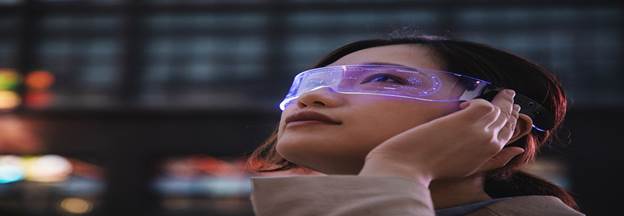
A fresh contender in the smart glasses race, and a promising future for wearable accessibility
Google’s new smart glasses are stepping onto the scene with a cleaner, more practical vision than the smart eyewear experiments of years past. Built as part of the Android XR push with Samsung and eyewear partners Warby Parker and Gentle Monster, the new lineup is designed to bring hands-free help into everyday life without making users feel like they are wearing a lab project on their face. Google says the glasses will come in audio-first and display-equipped versions, with the audio model expected first, and the focus is crystal clear: get directions, send texts, snap photos, and ask questions about the world around you without constantly reaching for a phone. That is a meaningful evolution, because the real magic of wearable tech is not when it looks futuristic, it is when it fades into the background and simply makes life easier. For blind and low-vision users, the most promising part of Google’s new smart glasses lies in their practical, everyday features. Google says users will be able to ask about what they see, hear translations of speech and text in real time, receive natural turn-by-turn directions, and handle messages and calls hands-free. Those are not flashy demo tricks; they are the kinds of capabilities that can support confidence, mobility, and independence in daily routines. Meta’s smart glasses already show how meaningful this category can become, with features aimed at describing surroundings, supporting hands-free creation, and helping users navigate tasks through voice and AI assistance. XREAL brings a more immersive AR angle to the conversation, but Google’s approach feels especially focused on day-to-day wearable help that blends accessibility with mainstream utility.
Pricing is not available at this time for Google’s new intelligent eyewear, but what is already clear is that the smart glasses category is becoming more serious, more competitive, and more relevant to accessibility than ever before. The reason blind and low-vision users are watching these devices so closely is simple: AI glasses can help describe surroundings, support reading and translation, and keep users heads-up and connected while moving through the world. That is not science fiction anymore, it is a rapidly developing accessibility story. The future of smart glasses will belong to the devices that are comfortable enough to wear, smart enough to trust, and useful enough to become part of real life rather than a novelty parked in a drawer. If the industry gets this right, the next generation of eyewear may not just be smart, it may become one of the most practical access tools of the modern era. Paschall Power Take: The best smart glasses will not win because they are flashy. They will win because they quietly, reliably help people live better.
Activate the link below for more about the upcoming Google Audio AI Smart Glasses💡
Intelligent eyewear with Gemini is coming this fall
Perplexity vs. CNN: The Fight Over Facts, Copyright, and the Future of AI News

A fast-rising answer engine is now facing another headline lawsuit — and the legal debate reaches far beyond one company. Perplexity is an AI answer engine built to deliver real-time, source-backed responses, blending conversational AI with search and citation tools into one fast-moving research platform. The company was founded in August 2022 and has grown into one of the most visible names in the answer-engine space, offering web access, mobile apps, and a broader ecosystem of AI tools aimed at helping people search, compare, summarize, and learn more efficiently. In the crowded AI field, Perplexity now sits firmly in the upper tier of major chatbot and answer-engine services, with industry traffic and market-share trackers placing it among the most-used AI platforms in the world. It is not the largest name in the category, but it has become one of the most important because it leans so heavily into what many users want most: quick answers, fresh information, and visible citations instead of mystery-box responses., The lawsuit with CNN matters because it goes straight to one of the biggest unresolved questions in modern AI: where is the line between facts that anyone can reference and protected journalism that cannot simply be copied, repackaged, and redistributed? CNN filed suit on May 28, 2026, in New York federal court, alleging that Perplexity unlawfully copied thousands of CNN stories, videos, and images to power its products and distributed competing material that CNN says was identical or substantially similar to its own work. Reports on the case say CNN alleged that more than 17,000 pieces of its content were involved, while Perplexity’s public response was the now-famous line: “You can’t copyright facts.” That is why this fight matters so much. It is not simply a clash between one media company and one tech company. It is a battle over whether AI systems can build a business around the informational value of journalism without paying for the labor, reporting, and editorial work that made those facts available in the first place.
For blind and low-vision users, Perplexity stands out because both its Windows experience and its mobile apps are highly accessible and usable for screen reader users, making it one of the more practical AI tools for people who rely on spoken access to information. On mobile, the app has been described as highly accessible, with good screen-reader performance and strong usability for screen reader users. On Windows, Perplexity is available through its web and desktop-style experiences, and blind users actively use it as part of their daily workflow for research and information access. That matters because an AI tool is only as useful as its real-world usability, and for many blind users, Perplexity delivers a fast, structured, source-backed experience that works well with screen readers and supports independent information gathering. In a tech world full of flashy promises, that kind of day-to-day usability is not a side note — it is the difference between a clever demo and a genuinely useful tool. Paschall Power Take: Perplexity wants to organize the world’s knowledge into quick answers — but the next chapter of AI will depend on whether quick answers can coexist with fair compensation, credible reporting, and technology that stays accessible to everyone. Activate the link below for more about the Perplexity and CNN lawsuit💡
Samsung Wallet, CLEAR, and the Accessibility Debate Around Facial Recognition

Samsung’s new Samsung ID with CLEAR brings a passport-backed digital ID into Samsung Wallet for U.S. passport holders, allowing travelers to verify their identity at more than 250 TSA checkpoints and at select venues, including BMO Stadium in Los Angeles. Samsung and CLEAR describe the feature as a free digital ID stored in Samsung Wallet and verified through CLEAR’s identity platform, expanding Samsung Wallet’s role beyond payments and passes into digital identity for travel and age verification. CLEAR describes itself as a secure identity company whose platform is used across travel, sports, health care, and digital verification, and says it relies on biometrics such as face, eyes, and fingerprints to confirm identity. For blind and low-vision users, the key accessibility question is not just whether facial recognition exists, but whether the entire Android experience can be used independently. On that point, Android and Samsung offer meaningful support: Google says TalkBack gives “eyes-free” control of Android devices, while Samsung highlights TalkBack as a screen reader for Galaxy users with vision impairments. Google’s support materials also note that TalkBack users can unlock devices with a fingerprint sensor or face unlock, which suggests that biometric access can be part of an accessible workflow when supported by the device and app. Facial recognition itself has a long history, beginning with research in the 1960s, advancing through approaches like Eigenfaces in the late 1980s and 1990s, and accelerating dramatically with deep learning in the 2010s before spreading into smartphones, airports, and digital identity systems. Yet that history is also a cautionary one. NIST found that many face-recognition algorithms showed demographic differences in error rates, including higher false-positive rates for some groups depending on the algorithm and testing conditions, while MIT research famously highlighted sharp disparities in facial-analysis accuracy involving darker-skinned women. Those findings help explain why facial recognition remains controversial, especially in high-stakes settings. For blind users, this matters doubly: a tool may be convenient when it works, but if it depends on precise camera framing, inconsistent image capture, or inaccessible setup steps, independence can quickly turn into frustration. The available sources show strong Android accessibility features, but they do not specifically state that Samsung ID with CLEAR has been comprehensively tested for blind users in every stage of enrollment and verification.
Public concern over trust is also shaped by years of headlines about wrongful identification and racial bias, but it is important to separate CLEAR from Clearview AI, because they are not the same company, at least they don’t appear to be the same, but do have very similar purposes, within the same types of industry. CLEAR is the identity company partnering with Samsung Wallet, while Clearview AI is the facial-recognition company whose scraped image database and law-enforcement use drew major privacy lawsuits and public criticism. The mass-scraping and biometric privacy litigation I found—including the 2025 settlement over alleged biometric privacy violations—concerned Clearview AI, not CLEAR Secure. At the same time, CLEAR has faced its own scrutiny. Reporting on a 2023 TSA probe and subsequent coverage described incidents involving identity verification failures and improper escorting through airport security procedures, raising concerns about operational oversight even though those controversies were different from the wrongful-arrest cases associated with police facial-recognition systems. CLEAR’s broader footprint is significant: the company says it has 100+ partners, supports services across airports and enterprise identity, and publicly highlights relationships involving LinkedIn, travel partners, health systems, and car-rental services such as Avis.
So where should readers land? Facial recognition clearly offers real advantages: speed, convenience, and in some cases a simpler alternative to passwords or physical documents. It may also support some blind and low-vision users when paired with Android accessibility tools like TalkBack, braille support, and alternative biometric options such as fingerprint unlock. But the faults remain serious: demographic bias has been repeatedly documented, privacy concerns remain unresolved across the industry, and operational mistakes can carry real-world consequences. The smartest path forward is not blind acceptance or blanket rejection, but informed caution. Facial recognition should be treated as one tool among several, not the only way to unlock a phone, verify identity, or move through the world. Paschall Power Take: For blind users especially, the gold standard should be choice: a system that offers accessible nonvisual navigation, dependable backup methods like PINs or fingerprint authentication, and transparent proof that both accuracy and accessibility have been taken seriously. Activate the below link for more about Samsung’s new (Clear) wallet security feature💡
Samsung partners with CLEAR, bringing Samsung ID with CLEAR to Samsung Wallet
Paschall Power Star of the Month: Mr. Clarence B Jones
We have reached the end of our 31st edition, you know what that means, right? Yes indeed, it is time to honor the Paschall Power Star for June 2026, and this incredible civil rights leader goes back to one of the world’s greats, Dr. Martin Luther King. Mr. Clarence Jones was in fact one of the men who helped Dr. King draft the famous speech “I have a dream,” and was also the lawyer for Dr, King, amongst many other lifetime accomplishments. Read on for more about this legend in civil rights, education, community advocacy, and overall strength!
Clarence B. Jones: A Life of Courage, Justice, and Faith
By the Paschall Power Newsletter Team

Clarence B. Jones was a distinguished civil rights lawyer, strategist, educator, and writer whose life reflected perseverance, brilliance, and purpose. He was born on January 8, 1931, in Philadelphia, Pennsylvania, to parents who worked as domestic servants, and his early years included time in foster care and boarding school before he continued his education at Columbia University. He later earned his law degree from Boston University in 1959, laying the foundation for a remarkable life of advocacy and public service. Jones’ life changed in 1960 when he joined the legal team defending Dr. Martin Luther King Jr. in Alabama. From that point on, he became one of Dr. King’s most trusted advisers, serving as his personal attorney, draft speechwriter, and close friend during the height of the Civil Rights Movement. He helped carry Dr. King’s handwritten words out of a Birmingham jail cell, which later became the historic “Letter from Birmingham Jail,” and he also served on the legal team connected to the landmark New York Times v. Sullivan case.
One of Clarence B. Jones’ most lasting contributions was his role in helping draft Dr. King’s historic “I Have a Dream” speech, delivered at the March on Washington in August 1963. Stanford’s Martin Luther King, Jr. Research and Education Institute states that Jones assisted King in drafting the speech and helped preserve its copyright, while the University of San Francisco also recognizes his role in helping shape that iconic address. The Library of Congress further documents Jones’s own reflections on his significant contributions to the speech in his oral history interview. After Dr. King’s assassination in 1968, Jones continued to serve the public through law, journalism, finance, and higher education. He helped negotiate during the 1971 Attica prison uprising, became editor and part owner of the New York Amsterdam News, later worked in investment banking, and was recognized as the first African American allied member of the New York Stock Exchange. In later years, he taught at the University of San Francisco, became a scholar-in-residence at Stanford’s Martin Luther King Jr. Research and Education Institute, co-founded the Institute for Nonviolence and Social Justice at USF, and received the Presidential Medal of Freedom in 2024. He died on May 22, 2026, at the age of 95, leaving behind a legacy of courage, wisdom, and service that will continue to inspire generations. The Paschall Power Newsletter Team honors men like Mr. Clarence B. Jones for their lifetime commitment to community, civil rights, and strong faith. His example reminds us that true leadership is rooted in service, moral courage, and a steadfast belief in justice for all. Activate the below link for more about the amazing life of Mr. Clarence Jones💡
Jones, Clarence Benjamin | The Martin Luther King, Jr. Research and Education Institute
Stay Connected, Share, and Support
On behalf of the Paschall Power Newsletter team, thank you for reading. Do you have questions, suggestions for future content, or interest in submitting an article for a future release? Drop us a line at the contact link below:
Contact us – accessiblepass.net
https://accessiblepass.net/contact-us/
Consider Donating
Paschall Power sincerely thanks and appreciates all donations that help keep this work moving forward. “Growth occurs through individual effort, community support, and the generosity of those with integrity and power.” Please activate the link below for our donation page:
Consider Donating – accessiblepass.net
https://accessiblepass.net/donation/