 |
| Phone: 267-437-3098 Fax: 267-385-7300 Email: Pass1@Accessiblepass.net Website: https://accessiblepass.net |
| Welcome to the world’s number one information source for the blind, we are, the Paschall Power Newsletter. Every newsletter is focused on hand picked topics to keep us, the blind community up to date on access technology, AI, Kool tech and related news, our team cherishes your time spent with us, may the (Most High) guide your journey with blessings! Special newsletter update👌Our newsletter team is excited to announce that we will be including articles on “accessible cooking, housing, travel, and urgent issues concerning the greater blind community, keeping you informed is our accessible mission! |
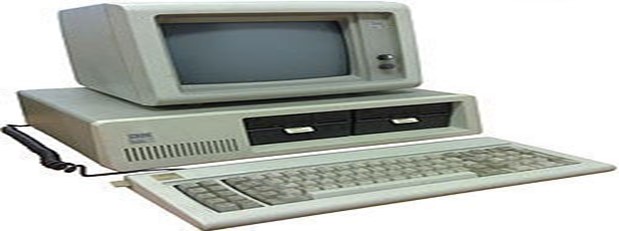 |
| IBM introduced its first personal computer, the IBM PC, in 1981 Accessibility Note; if you are reading this Newsletter with a screen reader, we suggest activating your “say all feature,” and enjoy the entire experience hands free, including the accessible images and other items that will be described, you may also move by headings to jump between articles!Please grab a moment to take in the below quote from Oliver Napoleon Hill:”Every adversity, every failure, every heartache carries with it the seed of an equal or greater benefit.”Let’s get into some great tech news📰35 Years of Progress: Celebrating the Americans with Disabilities Act |
 |
| This past July marks the 35th anniversary of the Americans with Disabilities Act (ADA), a landmark civil rights law that has profoundly transformed the lives of millions of Americans with disabilities. Signed into law by President George H.W. Bush on July 26, 1990, the ADA was championed by a bipartisan coalition, including key figures like Senator Tom Harkin and Representative Tony Coelho, after years of tireless advocacy by the disability community. The act sought to ensure equal opportunity, full participation, independent living, and economic self-sufficiency for individuals with disabilities, dismantling discriminatory barriers that had long existed in society. Its passage recognized that people with disabilities deserve the same rights and opportunities as all other citizens, prohibiting discrimination in employment, public services, public accommodations, transportation, and telecommunications. This momentous legislation was a culmination of decades of grassroots activism, demonstrating the power of collective voices demanding equality.The ADA’s impact on the lives of Americans with disabilities, especially those who are blind or have low vision, has been nothing short of revolutionary. In education, the ADA has mandated reasonable accommodations, such as textbooks in alternative formats, adaptive technology, and extended time for exams, allowing visually impaired students to access higher education and thrive academically. In careers, the law has opened doors to employment by requiring employers to provide reasonable accommodations like assistive technology, accessible websites, and modified training, enabling blind and low vision individuals to secure meaningful work and contribute their talents. For instance, accessible technology like screen readers (e.g., JAWS, NVDA, Voiceover) and magnification software (e.g., ZoomText) has empowered blind individuals to excel in fields such as computer programming, software development, and IT support, where they can write and debug code just as efficiently as their sighted counterparts. This technological revolution has also significantly advanced independence for many, empowering them to navigate daily life with greater autonomy and to pursue entrepreneurial ventures. Blind business owners, for example, can now manage online stores, conduct banking, and communicate with clients using accessible digital platforms, nurturing a new generation of visually impaired entrepreneurs. A prime example is Paschall Access Solutions, a blind-owned and operated company that stands as a testament to the ADA’s success, providing invaluable services and information, and advocating tirelessly for the blind community. Furthermore, the ADA has paved the way for blind individuals to assume leadership roles, from politicians like the late Senator Max Cleland, who served on the U.S. Senate from Georgia, to judges who utilize screen readers and accessible legal databases to preside over courtrooms with fairness and precision. These advancements underscore how the ADA, in conjunction with technological innovation, has truly leveled the playing field.As we celebrate these monumental achievements, it is more critical than ever to actively support legislators who champion the ADA. Recent years have seen various challenges to the ADA’s protections, including attempts to roll back voting accessibility and other fundamental rights. These challenges underscore the ongoing need for vigilance and advocacy to ensure the ADA’s continued strength and expansion. To learn more about your rights under the ADA as a blind or low vision individual, resources like the U.S. Department of Justice ADA Information Line offer valuable information and advocacy resources, including extensive details on supporting the ADA. To make your voice heard and advocate for strengthening the ADA, reach out to your members of Congress and local legislators. You can typically find their contact information through official government websites. A concise, personal message highlighting the ADA’s importance to you and your community can make a significant difference in shaping policy and ensuring that the promise of the ADA continues to flourish for generations to come.Activate the below link for essential advocacy information for the blind💡Advocacy & Resources for your life! – Paschall Community ServicesThe Accessible Smart Glasses Wars: A Visionary Battle for Independence |
 |
| The landscape of assistive technology is undergoing a fascinating revolution, particularly for the blind and visually impaired community, as “accessible smart glasses” emerge as powerful tools for enhanced independence. Gone are the days of fumbling with a separate phone for visual information; now, sleek, voice-controlled eyewear is bringing the world into focus. Among the front runners in this friendly technological skirmish are the Meta Ray-Bans (and their stylish cousins, the Oakley Meta’s), the burgeoning Echo Vision glasses, and the well-established Envision Glasses. Each leverages cutting-edge AI assistants like Meta AI, Alexa and the innovative “Ask Envision” (currently powered by GPT-4) to provide real-time descriptions of surroundings, read text aloud, and identify objects and faces. Today, the blind can simply ask their accessible smart glasses, “Hey Meta, what’s on this menu?” or “Envision, describe the room I’m in,” and receive instant, auditory feedback. These devices also brilliantly bridge the gap to human assistance, integrating seamlessly with services like “Be My Eyes,” allowing users to connect with live sighted volunteers who can provide visual guidance through the glasses’ camera – a true superpower for navigating unfamiliar environments or deciphering that notoriously tiny print on a new product.The benefits of these intelligent spectacles are, quite frankly, eye-opening. They offer an unprecedented level of hands-free interaction, freeing up canes and guiding dogs for their primary duties, and allowing for a more natural engagement with the world. Beyond simply “seeing,” these glasses facilitate real-time information access, from reading street signs and public transit schedules to identifying currency and even detecting facial expressions, thus enhancing social interactions. The future of accessible smart glasses gleams with promise. We anticipate even more sophisticated AI capabilities, offering deeper contextual understanding of surroundings, proactive hazard warnings, and perhaps even integrated haptic feedback for a truly immersive navigational experience. As these “smart” companions become more affordable and seamlessly integrated into daily life, they will undoubtedly continue to expand the horizons of information and independence for the blind, proving that sometimes, the best way to see the world is with a little help from your very fashionable, highly intelligent friends.Activate the below (You Tube Video) for more on the (Echo Vision Smart Glasses) 💡Smart Glasses with Alexa: Customer StoriesAccessible Home Appliances: Independence That Needs No Wi-Fi Connection! |
 |
| In a world increasingly tethered to the internet, imagine the peace of mind knowing your essential home appliances can still empower you, even when the Wi-Fi goes rogue. For individuals who are blind or have low vision, this isn’t just a convenience – it’s a cornerstone of independence. Forget the frustration of an internet outage leaving you in the dark; specialized self-voicing appliances are designed to ensure seamless accessibility, delivering crucial auditory feedback directly from the device itself. From microwaves that literally tell you “cooking for two minutes” to talking kitchen scales that announce precise measurements, these ingenious innovations are normalizing daily life and ensuring that the simple joy of preparing a meal, or setting your home’s climate, is never dependent on your router’s mood swings.Beyond the kitchen, essential home controls like thermostats are also stepping into the light of internet-independent accessibility. While many “smart” thermostats rely heavily on Wi-Fi for their most advanced features, there are accessible models and solutions designed with direct voice interaction in mind, eliminating the need for a persistent internet connection. For example, the VIP Talking Thermostat (various models like the VIP3000) is specifically engineered for blind and low-vision users. This remarkable device speaks aloud about the indoor temperature, your desired setting, and programming instructions. You don’t speak to it with complex commands, but rather it guides you with auditory prompts as you navigate its tactile buttons. This ensures that adjusting your home’s comfort level is always straightforward and intuitive, regardless of whether your smart home assistant is on speaking terms with the cloud. Back to the kitchen realm, we must mention the accessible voice-controlled oven module, like those offered by innovators such as Feelware. Instead of relying on cloud-dependent AI assistants like Alexa or Gemini (who, let’s face it, sometimes struggle to understand us even when the internet is working!), these modules interface directly with your oven’s existing controls. They intelligently interpret dial positions and button presses, then provide crystal-clear voice feedback on temperature settings, cooking modes, and timer status. This means accessible baking and cooking is no longer a futuristic dream, but a present-day reality, fostering immense confidence and autonomy in the kitchen, rain, or shine – or, more accurately, internet connection or not.Activate the below link for more about accessible home appliance solutions from (Feelware)💡Feelware blind people’s aid devices shop | Discover now!A Lifeline for Windows 10 Users: The Extended Security Update Program |
 |
| As the October 14, 2025, the end-of-support date for Windows 10 looms large, many users are understandably concerned about the future of their systems. Fear not, dear readers, for Microsoft has extended a helping hand in the form of the Extended Security Update (ESU) program. This program allows individuals and organizations to continue receiving critical and important security updates for their Windows 10 PCs for up to three additional years. While it won’t magically bestow new features or technical support, the ESU program provides a crucial security blanket, mitigating the risks of malware and cyberattacks for those who need more time before transitioning to Windows 11 or a new device. The good news? You can enroll for a one-year extension for a one-time purchase of $30, or, for the truly thrifty and cloud-savvy, even obtain it for free by synchronizing your PC settings to the cloud via a Microsoft account or by redeeming 1,000 Microsoft Rewards points. Who said security couldn’t be rewarding?This ESU program is particularly significant for the vast number of blind and low-vision users who have painstakingly adapted their workflows and assistive technologies to Windows 10. The jump to Windows 11, with its redesigned interface and potentially disruptive changes to accessibility features, can be a daunting prospect, often requiring significant time and effort to reconfigure essential tools like screen readers (e.g., Narrator, JAWS, NVDA) and magnification software. For these users, whose digital independence is often deeply intertwined with their current operating system, the ESU program offers invaluable breathing room. It provides the continued security necessary to keep their familiar and functional Windows 10 environments running smoothly, allowing them to continue their work and daily activities without the immediate pressure of a complex and potentially disabling upgrade. Beyond the ESU, users can bolster their security by ensuring they have robust antivirus software, keeping web browsers and other applications updated, and regularly backing up their data to minimize potential losses.Activate the below link for more about the (ESU Program) 💡Extended Security Updates (ESU) program for Windows 10 | Microsoft LearnChatGPT so called (AI Therapy) has no confidentiality protection, warns Sam Altman! |
 |
| As the digital landscape evolves, so too do the ways we seek support, leading some to consider AI assistants like ChatGPT as a stand-in for professional therapy. While ChatGPT excels at a growing list of functions, from intricate research tasks to streamlining computer operations, it’s crucial to remember a fundamental truth: it is an artificial intelligence created by humans and thus operates within the inherent imperfections of human-designed systems. Unlike a trained human therapist who brings empathy, nuanced understanding of human experience, and ethical guidelines to each session, ChatGPT functions by predicting the next most probable word based on vast datasets. This critical difference means it lacks genuine emotional intelligence, the capacity for true connection, or the ability to offer the personalized, confidential support vital for effective mental health care.Leaders in the field of therapy have voiced significant concerns about this emerging trend. The American Psychological Association (APA) has met with federal regulators, urging safeguards against AI chatbots impersonating therapists due to risks like inaccurate diagnoses, inappropriate treatments, and privacy violations. A Stanford University study highlighted that AI therapy chatbots can even perpetuate mental health stigmas and, in some scenarios, encourage dangerous behaviors rather than providing appropriate therapeutic intervention. Psychotherapists emphasize that the core of effective therapy lies in the human connection therapeutic relationship built on trust, empathy, and tailored interventions that current AI technology simply cannot replicate. Relying on an AI can also lead to a lack of genuine self-discovery, as the AI might inadvertently validate a user’s existing biases rather than challenge them constructively.Perhaps one of the most chilling warnings comes directly from Sam Altman, CEO of OpenAI, who has explicitly stated that ChatGPT is not a therapist and that conversations with it are not private. Unlike privileged communications with a doctor, lawyer, or therapist, there is currently no legal protection for your deepest secrets shared with an AI. This means that, in certain legal or security contexts, your conversations with ChatGPT could potentially be retrieved and used against you in court. This stark reality underscores a significant danger: the intimate details shared with an AI, intended for personal solace or guidance, could inadvertently become public record, leaving users vulnerable and exposed. Therefore, while AI offers impressive capabilities for many tasks, when it comes to the delicate and deeply personal realm of mental health, the irreplaceable value of human expertise, confidentiality, and empathy remains paramount.Activate the below link for more about Sam Altman’s ChatGPT (Therapy) warning💡Sam Altman Issues Chilling Warning: ChatGPT Is Not A Therapist – Your Deepest Secrets Could Be Used Against You In Court With No Legal ProtectionHave you tried Narrator lately? Instant image descriptions have been added…. |
 |
| It sounds like Windows Narrator has been hitting the gym and, well, getting quite the glow-up! No longer just a basic screen reader, it’s evolving into a seriously capable tool for accessibility, complete with impressive, realistic voices and seamless keyboard controls that make navigating your PC a breeze. Microsoft’s ongoing commitment to enhancing Narrator means a smoother, more intuitive experience for users who rely on auditory feedback. This constant refinement transforms Narrator into a truly effective screen reader, making digital content more accessible than ever before. Through the years, Narrator’s voices have consistently improved, now boasting a natural and human-like quality that truly rivals other leading screen readers on the market. Gone are the robotic, monotone pronunciations of yesteryear; Narrator now offers a range of high-quality, synthetic voices that are surprisingly pleasant to listen to for extended periods. This makes a huge difference for daily computer use, reducing ear fatigue and improving comprehension, allowing users to engage with their digital environment with greater ease and comfort. It’s a testament to the advancements in text-to-speech technology that a free, built-in tool can offer such a premium auditory experience. One of the most exciting recent additions to Narrator’s repertoire is its new “image description” function, leveraging the power of AI to provide rich, detailed descriptions of visual content. This feature is a game-changer for blind and low-vision users, addressing the common problem of inaccessible images without proper alt text. To use it, simply bring an image into focus and press the Narrator key + Ctrl + D. Narrator will then generate a description, detailing elements like people, objects, colors, and even text within the image. For instance, if you encounter a graph, Narrator might describe it as “A bar chart showing quarterly sales figures, with Q1 at 100 units, Q2 at 120 units, and Q3 at 90 units.” There are two “flavors” of this feature: a basic version available on most PCs, which utilizes online services, and a more advanced, “rich image description” version specifically for Copilot+ PCs. The Copilot+ version takes advantage of on-device AI models to provide even more comprehensive and contextual descriptions, truly bringing visual content to life through sound, all while maintaining privacy as the processing happens locally.👍Check out some Paschall Power quick Narrator commands.4 Essential Narrator CommandsHere are four basic keyboard commands to help you get started and navigate efficiently with Narrator: Turn Narrator On/Off: Press Windows key + Ctrl + Enter. This acts as a quick toggle to activate or deactivate Narrator.Stop Reading: Press Ctrl. This will immediately halt Narrator’s current speech, useful when you’ve heard enough or need to pause.Read Continuously: Once your cursor is at the desired starting point, press Narrator key + Down Arrow or Narrator key + R. This command allows Narrator to read through content, such as a document or webpage, from that point onward without needing further prompts until it reaches the end or you stop it.Narrator Key: By default, both the Caps Lock and Insert keys can serve as your Narrator key. This key is used in combination with other keys for most Narrator commands. You can choose your preferred modifier in Narrator settings for convenience.Activate the below link for more about Windows Narrator by Microsoft💡Complete guide to Narrator – Microsoft SupportSpotify expands its (Audiobook’s family plans) opening access to 250k audiobooks…. |
 |
| It’s time to celebrate a new chapter in literary accessibility with Spotify’s new Audiobooks+ add-ons for family plans. While audiobooks have long been a source of information and entertainment for many, they hold a special significance for individuals who are blind or have low vision. For these users, audiobooks are an essential gateway to the world of literature, providing a vital means of accessing everything from the latest bestsellers to educational materials and academic texts. With a library of over 250,000 titles, Spotify’s offerings span a diverse range of genres, including everything from science fiction and fantasy to non-fiction and memoirs, ensuring there’s something for every interest. The expansion of audiobook access to all members of a family plan, rather than just the plan manager, is a truly thoughtful update. This change, which allows each member to request and receive their own allocation of listening hours, ensures that a family’s avid readers—especially those who rely on audiobooks for their primary form of reading—are not limited by a shared quota. This new flexibility is a fantastic step forward, helping to make the magic of storytelling more inclusive and enjoyable for everyone in the household.This exciting update arrives just in time for families seeking new ways to connect and share experiences, especially during the summer months. By making it possible for each family member to access their own library of audiobooks, Spotify is not just offering a service—it’s fostering a culture of shared learning and leisure. The new add-ons, which also include a one-time 10-hour top-up option for when a book is just too good to put down, further highlight Spotify’s commitment to providing a flexible and user-friendly experience. For families with visually impaired members, this means that a student can listen to their required readings for school while their parents enjoy a popular memoir, all without a single argument over who gets to use the listening hours. This is a wonderfully practical solution to a surprisingly common problem, proving that good design isn’t just about aesthetics; it’s about making life a little bit easier and a whole lot more fun for everyone.Activate the below link for more about the new Spotify Audiobook family plans💡Spotify is improving audiobook access for its family plan subscribers – here’s what to expect from Audiobooks+ | TechRadarFlexible chimney-climbing robot dog, could this be the future of (Guide Dogs) |
 |
| Chimney -climbing technology has taken a vertical leap forward with the creation of KLEIYN, a quadrupedal robot developed by researchers at the Jouhou System Kougaka Laboratory at the University of Tokyo. Dubbed the world’s fastest chimney-climbing robot dog, KLEIYN can scale vertical walls at an average speed of 150 mm/s, a feat that is a staggering 50 times faster than its competitors. The robot achieves this by pressing its legs against two opposing walls for support, a technique known as chimney climbing. Weighing around 40 lbs., the robot features an active waist joint and quasi-direct-drive motors, allowing for precise and agile movements. Its ability to navigate both uneven terrain and vertical surfaces shows a significant advancement in robotic locomotion, paving the way for a new generation of versatile machines.The unique capabilities of a chimney -climbing robot like KLEIYN, when combined with artificial intelligence, open a world of inspiring possibilities, particularly in the creation of robot guide dogs for the blind. Imagine a guide dog that not only provides accurate and reliable navigation but is also completely self-sufficient. This robotic companion could be equipped with a mobile Wi-Fi connection, ensuring constant connectivity and real-time navigation updates. For enhanced peace of mind, a “special edition” could even include security features. Unlike traditional guide dogs, this robotic counterpart would not require medical attention or bathroom breaks, offering a new level of freedom and independence to its user. This technology is a beacon of hope, promising a future where cutting-edge robotics and AI can provide a reliable, low-maintenance, and truly transformative tool for individuals who are blind.Activate the below link for more about the chimney -climbing robot dog & to listen to an (You Tube Video) 💡Watch the world’s fastest chimney-climbing robot dog scale walls 50 times quicker than competitors | Electronics360Wait! Was that a human or chatbot I was talking to? |
 |
| We have entered a brave new world where a friendly “hello” from a customer service representative might not be coming from a human at all. The rapid advancements in large language models have made it increasingly difficult to discern a human from a chatbot. Modern AI can generate responses that are not only grammatically perfect and contextually aware but also eerily natural, often mimicking human conversational styles. This shift presents a concerning challenge: when the line between a person and a program blurs, how can we be sure we’re not talking to a machine, especially when we’re seeking empathy or genuine support? It’s a situation that requires a bit of detective work—and a healthy dose of humor to cope with the absurdity of it all. After all, if a robot asks how your day is, is it being friendly or just fishing for data points?Thankfully, even the most sophisticated chatbots aren’t without their tells. While they may have a stellar vocabulary, they often struggle with a lack of personal experience, resorting to vague or generic anecdotes that sound like they were written by a very enthusiastic, but soulless, corporate employee. They can also get tripped up by nonsensical logic puzzles or questions that require a leap of creativity or emotional intelligence. A clever trick is to deliberately introduce a logical inconsistency or a personal detail that a bot couldn’t possibly know. As one of our sources humorously suggests, try asking a bot about the “smell of sun-dried grass” from its childhood to see if it can keep up. Another telltale sign is their superhuman efficiency—instantaneous responses, perfect grammar, and the ability to be available 24/7 are all strong indicators that you’re not chatting with a human who also needs to eat, sleep, and heaven forbid, make a typo.Activate the below link for more about identifying chatbots on the telephone💡What to Do if You Suspect You Are Talking to a ChatbotWould you get a (Bionic Eye) transplant? It may be possible soon…. |
 |
| Elon Musk’s Neuralink, a company known for its ambitious brain-machine interface technology, is reportedly setting its sights on a monumental challenge: restoring vision to the blind through the development of a “bionic eye.” While still in the research and early development phases, the potential implications of such a breakthrough are staggering. Imagine a world where blindness is no longer a life-altering condition, where individuals who have never seen or have lost their sight could perceive the world around them through a direct neural interface. This endeavor promises not just medical advancement, but a fundamental shift in human capability and accessibility. Should Neuralink, or any entity for that matter, successfully develop a safe and effective bionic eye implant, it would undoubtedly be hailed as one of the most significant medical achievements in history, offering hope and a dramatically improved quality of life to millions globally.The successful implementation of a bionic eye has the potential to reshape societal dynamics on a global scale. Integrating sight for the blind could revolutionize education, employment, and social interaction, fostering greater inclusivity and independence. The economic benefits, stemming from increased participation in the workforce and reduced healthcare burdens, would also be substantial. Beyond the practical implications, the very notion of overcoming a fundamental sensory limitation through technology challenges our perceptions of disability and human potential. This could spark further innovation in neural interfaces, paving the way for solutions to other neurological conditions. So, what do you think about Bionic Eye implants for blind people? Are you blind? If so, would you get the implant? Share your thoughts with us at PASS1@AccessiblePASS.net and stay tuned to the next Paschall Power Newsletter for a compilation of your responses!Activate the below link for more about the (Bionic Eye) transplant study💡Elon Musk’s Neuralink Joins Study Working Toward a Bionic Eye – BloombergThe Paschall Power Star of the MonthWe have now come to the end of our 21th edition of the Paschal Power Newsletter, and you know what that means, right? ahh yes, the Paschall Power Star for the month of August (2025) and our Power Star for the month of August is Mr. Justin Dart Jr. Mr. Dart was an early pioneer for the (ADA) when it was not popular to fight for the disabled! Early (ADA Pioneer) Justin Dart Jr. |
 |
| Justin Dart Jr., a man whose name is synonymous with the fight for disability rights in America, embarked on his lifelong crusade during an era when the challenges faced by people with disabilities were largely invisible to mainstream society. Born into a prominent and wealthy family, Dart’s own experiences after contracting polio in his youth ignited a fervent passion for justice and equality. Unlike many of his peers, he chose to leverage his privilege and personal understanding to amplify the voices of a marginalized community. His early activism was often met with indifference or outright hostility, as disability rights were not yet a recognized or popular cause. Undeterred, Dart crisscrossed the nation, engaging in grassroots organizing, tirelessly meeting with individuals, and persistently lobbying lawmakers, laying the groundwork for a seismic shift in societal attitudes and legal protections.Dart’s unwavering commitment played a pivotal role in the eventual passage of the Americans with Disabilities Act (ADA) in 1990. For years leading up to this landmark legislation, he orchestrated a powerful movement, famously stating, “We will no longer tolerate the discriminatory barriers that keep us from participating fully in American life.” His charismatic leadership and compelling personal narrative helped to galvanize support from a diverse coalition of disability advocates, legal experts, and concerned citizens. Even when faced with political roadblocks and public apathy, Dart’s infectious optimism and relentless advocacy kept the cause alive. He understood that true equality required not only legal mandates but also a fundamental change in perception, constantly challenging stereotypes and championing the inherent dignity and potential of every individual, regardless of their abilities.The impact of Justin Dart’s tireless efforts reverberates throughout American society today. The ADA has dismantled countless physical and societal barriers, opening doors to employment, education, transportation, and public accommodations for millions of individuals with disabilities. Beyond the legal framework, Dart’s legacy lies in fostering a greater understanding and acceptance of disability as a natural part of the human experience. He transformed the fight for disability rights from an obscure struggle into a mainstream movement, forever altering the landscape of civil rights in America and inspiring generations to continue the pursuit of a truly inclusive and equitable society.Activate the below link for more about Justin Dart Jr💡Heroes of the ADA: Justin and Yoshiko Dart | Access Press👌On behalf of the Paschall Power Newsletter team, we thank you for reading. Do you have any questions, suggestions for content or may you be interested in submitting an article for future releases? drop us a line at the link below💡Contact us – (accessiblepass.net)👌Consider Donating! Paschall Power sincerely thanks and appreciates all donations that aids in keeping us moving forward, “growth occurs through individual effort, community support and the generosity of those with integrity and power,” please activate the below link for our donation page💡Consider Donating – (accessiblepass.net) |