Welcome to Edition 33
Welcome to the Paschall Power Newsletter — your trusted, community-driven source for news, technology, and inspiration crafted specifically for the blind and low vision community. Each edition, we hand-pick the stories that matter most to your accessible and digital journey — from the latest screen reader updates and AI breakthroughs to cultural highlights, empowering profiles, and practical tools that make everyday life richer and more independent.
Quick Accessible Fact
Did you know? The first official screen reader for Windows was SlimWare Window Bridge, released by Syntha-Voice Computers in 1992 for Windows 3.1!
Accessibility Note
Reading with a screen reader? Use Say All or Read All for continuous reading and use heading navigation to move quickly from story to story. Article titles in this edition are formatted as headings for faster navigation.
Inspiration Corner – Quote of the Month
This month’s inspiration comes from Miles Davis, the groundbreaking trumpeter, composer, and bandleader whose career was defined by refusing to stand still.
“Always look ahead but never look back.”
Miles Davis
AI Smart Glasses, Public Recording, and Privacy: Know the Right, Know the Boundary

Paschall Power Newsletter – Civil Rights, Technology & Privacy Feature
AI smart glasses place a camera, microphone, and increasingly powerful artificial intelligence at eye level, which makes an old constitutional question feel brand new: what may a person record in public? One important correction comes first. The constitutional protection most directly connected to recording government officials performing official duties in public is the First Amendment, not the Fourth Amendment. Courts have repeatedly recognized a First Amendment right to record law enforcement activity in public when the person recording is lawfully present and is not interfering. The Fourth Amendment plays a different role by protecting people against unreasonable government searches and seizures. For example, the ACLU explains that police generally need a warrant to search the contents of a phone, even after an arrest. For smart-glasses users, that distinction matters: one amendment protects expressive and information-gathering activity, while the other protects against unjustified government intrusion into the device and its contents.
The phrase “no reasonable expectation of privacy in public” can be useful shorthand, but it should never be treated as a universal permission slip. A person on a public sidewalk can generally photograph what is in plain view, and recording public officials can serve accountability, journalism, advocacy, and the constitutional tradition of speaking, publishing, and petitioning government. Yet audio-recording laws vary by state, and privacy can still exist in some circumstances even when people are outside a home. The safest principle is that public visibility strengthens the case for recording what is openly observable, while secret conversations, sensitive settings, harassment, obstruction, and private-property rules can change the legal picture. That boundary becomes especially important when smart glasses move from the sidewalk into a store, workplace, medical office, school, home, or other privately controlled space. Property owners and organizations may establish photography and recording rules and can require a person to stop or leave, subject to other applicable laws. The technology may be new, but respectful use still begins with an old idea: freedom works best when we understand both the right and the responsibility that comes with it. Smart glasses can document history, help blind users gather visual information, and give citizens a powerful way to witness government in action, but informed use protects both access and trust.
Activate the following link for more information💡 ACLU – Recording and Documenting Police and Federal Agents
Getting Behind Legislation That Can Put Blind Americans Back to Work

Paschall Power Newsletter – Voting, Employment & Advocacy Feature
Voting is not only about choosing a candidate. It is also about understanding the legislation, priorities, and representatives that can shape whether our friends, relatives, clients, and neighbors have a fair opportunity to work. The Blind Americans Return to Work Act of 2025 is H.R. 1175 in the 119th Congress. Introduced on February 10, 2025, the bill would require the Social Security Administration to conduct a 20-year demonstration project for people receiving Social Security Disability Insurance because of blindness. Its central idea is straightforward: instead of allowing earnings above existing limits to create an abrupt loss of disability benefits, the demonstration would gradually reduce benefits as earnings rise.
Under the bill, a participating blind worker’s monthly SSDI benefit would be reduced by one dollar for every two dollars earned above the applicable exempt amount plus qualifying work-related expenses. The proposal would also remove the usual substantial-gainful-activity test for determining disability within the demonstration and would not apply the trial work period in the usual way. That matters because the fear of a sudden benefits cliff can make accepting additional hours, pursuing advancement, or returning to employment feel financially dangerous. A gradual offset is designed to make the transition toward work and higher earnings more predictable. As of this newsletter’s preparation in late October 2026, H.R. 1175 is a proposal, not a law. That is exactly why informed civic participation matters. Readers can study the bill, ask representatives where they stand, communicate directly with congressional offices, and vote with a clear understanding of how disability and employment policy reaches real households. Supporting good public policy does not mean supporting a slogan. It means reading the details and making our voices impossible to overlook. When blind and low vision voters organize around employment, independence, and economic opportunity, legislation stops being an abstract Washington conversation and becomes a community conversation about what kind of future we want to build.
Activate the following link for more information💡
Gemini Live Guided Vision: A New Kind of Digital Sight Assistance
Paschall Power Newsletter – Artificial Intelligence & Independence Feature
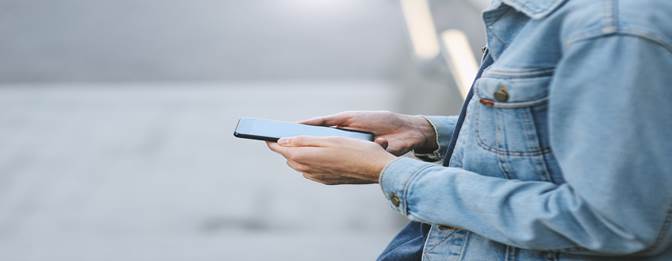
For blind and low vision Android users, Google’s newest Gemini accessibility development is one of the most practical AI changes of the year. On October 1, 2026, Google launched Guided Vision in Gemini Live across compatible Android devices. Rather than taking a single picture, waiting for a description, and starting over for the next question, a user can share the camera during a live Gemini conversation. Gemini can describe what the camera sees, answers spoken follow-up questions, and give verbal framing guidance such as moving the camera right, tilting it down, or stepping back when the object of interest is not clearly in view. That changes the rhythm of visual assistance. A person can ask Gemini to help read fine print, identify an object, describe colors or patterns, locate an item nearby, or explain details that become visible as the camera moves. Google says it developed Guided Vision with the blind and low vision community and partnered with Aira, using extensive visual-interpretation data and feedback from more than 1,000 Aira Trusted Testers. In everyday use, the experience can feel closer to a continuing visual conversation than the older “take a photo and describe it” model. It is similar in purpose to human visual-assistance services such as Be My Eyes or Aira, but the assistance is generated instantly by AI rather than provided by a person. The promise is enormous, but independence also means knowing the limits of the tool. AI can misunderstand what a camera sees, so Guided Vision should not be treated as a substitute for a cane, guide dog, trained mobility instruction, or human verification when a mistake could create serious risk. Used for the right tasks, however, this is a major step toward autonomous digital sight assistance that is conversational, immediate, and available whenever the phone is in hand. The deeper story is not that AI is replacing people. It is that blind users are gaining another way to ask the visual world questions on their own time, in their own words, and without waiting for someone else to become available.
Activate the following link for more information💡
Google – Guided Vision in Gemini Live
Apple’s 2026 iPads: More Power on the Inside, Accessibility at the Center

Paschall Power Newsletter – Tablets, Accessibility & Daily Living Feature
Apple’s current iPad family now stretches from the everyday iPad to the compact iPad mini, the M4 iPad Air, and the M5 iPad Pro. Apple’s U.S. store currently lists starting prices of $449 for iPad, $699 for iPad mini, $749 for iPad Air, and $1,199 for iPad Pro. The choices are increasingly about more than screen size. The Air and Pro bring Apple Intelligence with desktop-class Apple silicon, while the Pro adds the Ultra Retina XDR tandem-OLED display, ProMotion, Face ID, and Thunderbolt/USB 4. The Air offers a strong middle ground with an M4 chip, Apple Pencil Pro support, and 11-inch or 13-inch options. For low vision users, display size, brightness, contrast, glare, and how closely the device may be positioned can be just as important as processor benchmarks. Under the hood, the accessibility story remains one of iPad’s strongest reasons to consider the platform. VoiceOver provides a built-in screen reader with touch, keyboard, and braille navigation. Compatible refreshable braille displays can be used for reading, typing, and controlling iPad, while Braille Access expands the tablet into a braille-centered workspace. Zoom enlarges the whole screen or selected areas; Magnifier uses the camera to enlarge nearby text and objects; Live Recognition can identify text, doors, people, and other visual information; and Accessibility Reader can present text in a more customizable reading environment. Apple has also added richer AI-assisted image descriptions through Image Explorer on supported Apple Intelligence devices.
For our community, the best iPad is not automatically the most expensive one. A VoiceOver user focused on email, reading, meetings, web access, and braille may be well served without the Pro’s premium display, while a low vision user who benefits from the strongest screen technology or a larger 13-inch workspace may find the higher-priced models worthwhile. Before buying, compare the current Apple price, screen size, storage, Apple Intelligence support, and the accessibility features that matter to your daily routine. The good news is the part we should never take for granted: accessibility remains built into iPadOS, not sold as a separate add-on.
Activate the following link for more information💡
iPhone Duo and the Hinge Question: A Bold New Form Factor Meets an Early Hardware Test
Paschall Power Newsletter – Apple Hardware, Durability & Consumer Watch Feature
Apple’s new iPhone Duo has brought the foldable iPhone from years of speculation into customers’ hands, and the first days have also brought an issue worth watching carefully. Reports after launch describe a small number of inner displays cracking along the center hinge area. Apple told Engadget that it is aware of an issue affecting the inner display on a small number of iPhone Duo units and that customers who experience display problems should contact AppleCare for a replacement. Some reports describe bright lines, dead pixels, or cracking around the fold, which place attention squarely on the relationship between the hinge mechanism and the flexible internal display. This is different from simply noticing a normal foldable-screen crease. Flexible displays bend repeatedly at the same location, so hinge alignment, internal pressure, dust control, protective layers, and the way stress is distributed across the panel all matter. Early reporting has raised the possibility that a defective hinge component may be pressing against some displays, but not every account has independently established the precise cause, and Apple has not announced a broad recall. That distinction matters. A handful of early failures deserves serious attention, particularly on a premium first-generation device, but it does not automatically prove that every Duo has the same defect. For blind and low vision buyers, durability has an accessibility dimension too. A folding phone can offer a larger interior workspace for magnification and visual reading while remaining pocketable, but an unreliable folding area can interfere with touch, display visibility, and confidence in a device used for navigation, communication, and daily access. If you own a Duo, pay attention to unusual lines, dead pixels, cracking, bulging or rippling around the fold, or changes in how the hinge feels, and use Apple’s support process rather than trying to press or manipulate the display back into place. First-generation technology can be exciting and still deserve scrutiny. The optimistic view is not to ignore a problem. It is to expect the manufacturer to identify it quickly, support affected customers, and make the next production run stronger.
Activate the following link for more information💡
Engadget – Apple responds to iPhone Duo inner-display reports
Paschall Power Star of the Month – November 2026
Robert De Niro – A Lifetime of Great Performances, Civic Voice, and Giving Back
We have reached the conclusion of our November edition, and this month the Paschall Power Star shines on an artist whose influence reaches far beyond the movie screen, Robert De Niro!
Mr. Robert De Niro has spent more than five decades building one of American cinema’s most respected careers, while also lending his name, resources, and unmistakable public voice to civic participation, voter engagement, the arts, health causes, disaster recovery, and community renewal. New York City honored him with a Key to the City in 2023, recognizing not only his acting but his role in co-founding the Tribeca Festival and helping revitalize Lower Manhattan after September 11. De Niro’s humanitarian and civic record is broad. Public charity records associate him with organizations and causes including cancer research, AIDS and HIV work, childhood diabetes, disadvantaged youth, human rights, disaster relief, veterans, and voter education. He has also been outspoken about the responsibility to vote, saying in 2018 that there is “something more powerful than bombs, and that’s your vote.” His political voice has sometimes been blunt and controversial, but the larger civic principle behind his public engagement is clear: he believes citizens should participate, speak up, and use democratic tools rather than remain spectators. Whether one agrees with every political position he has taken or not, sustained civic participation is worth recognizing.
Then there is the work that made his name unforgettable. In The Godfather Part II, De Niro’s young Vito Corleone gave audiences a performance of restraint, observation, and quiet authority that earned him the Academy Award for Best Supporting Actor. In Taxi Driver, his portrayal of Travis Bickle created one of the most recognizable and unsettling character studies in American film, including the famous mirror sequence that became part of movie history. And in Raging Bull, his transformation into boxer Jake LaMotta combined physical commitment with raw dramatic control, earning him the Academy Award for Best Actor. Those three moments represent only part of a body of work that also includes Mean Streets, The Deer Hunter, Goodfellas, Awakenings, Cape Fear, Heat, Casino, Silver Linings Playbook, The Irishman, and Killers of the Flower Moon. The reason Robert De Niro is our Paschall Power Star is not simply that he became famous. It is that he used that fame in more than one direction: toward art, toward rebuilding a wounded New York neighborhood, toward charitable causes, and toward encouraging people to take democracy seriously. A powerful life does not have to fit into one lane. De Niro’s story reminds us that excellence in your profession can sit beside service to your community, and that the influence earned through achievement can become a megaphone for participation, culture, and causes larger than yourself.
Activate the following link for more information💡
NYC Mayor’s Office – Key to the City for Robert De Niro
Stay Connected, Share, and Support
On behalf of the Paschall Power Newsletter team, thank you for reading. Do you have questions, suggestions for future content, or interest in submitting an article for a future release? We would love to hear from you.
Activate the following link for more information💡
Consider Donating
The Paschall Power Newsletter team sincerely thanks and appreciates every donation that helps keep this work moving forward. Growth occurs through individual effort, community support, and the generosity of people who believe accessible information should reach everyone.
Activate the following link for more information💡
Donations – AccessiblePass.net
Written by the Paschall Power Newsletter Team